18 November 2026
How to choose the right evening desert safari in Dubai
Presented by @eveningdesertsafaridubaireport
Understanding what makes an evening desert safari work for you
An evening desert safari in Dubai is one of the most popular ways to experience the Arabian desert without spending the whole day in the sun. The format is well established: a late afternoon pickup, dune bashing, camel rides, sandboarding, a barbecue dinner under the stars, and live entertainment such as Tanoura dance or belly dancing. But not every safari is the same. Operators differ in the quality of their vehicles, the standard of their camps, the size of their groups, and the kind of activities they offer. Picking the right one means matching what they provide to what you actually want from the evening.
The first thing to recognise is that the term "evening desert safari dubai" covers a range of experiences. Some packages are budget-oriented, with large groups and a standard set of activities. Others are premium, with smaller groups, better food, and more exclusive camps. Some focus heavily on the adrenaline side, with longer dune drives and more challenging terrain. Others lean into the cultural side, with henna painting, shisha, and a more relaxed pace. Knowing which camp you fall into will save you time and disappointment.
Step one: decide on the group size and atmosphere
The most significant factor in your experience is the size of the group you will be with. Shared safaris can take anywhere from 10 to 40 people in a single vehicle, and the camp itself may host several dozen guests at once. If you enjoy meeting new people and don't mind a busier atmosphere, a shared safari is perfectly fine. But if you prefer a quieter, more personal evening, look for a private or small-group option. Many operators now offer a "premium" tier that caps the group at six or eight people per vehicle, and the camp is often a smaller, more refined setup.
Group size also affects the pace of activities. In a large group, you might wait for your turn on the camel or the sandboard. In a smaller group, everything moves faster and you get more time on each activity. Think about what matters more to you: social energy or individual attention.
Step two: check the dune bashing style and vehicle quality
Dune bashing is the centrepiece of most evening safaris. The driver takes the 4x4 over the dunes at speed, sliding and climbing in a way that can be thrilling or unsettling, depending on your tolerance. The style of driving varies widely. Some drivers are aggressive, pushing the vehicle hard. Others are more controlled, aiming for a fun but comfortable ride. If you are prone to motion sickness or have young children, you may want a safari that offers a gentler ride or even an option to skip the dune bashing entirely and go straight to the camp.
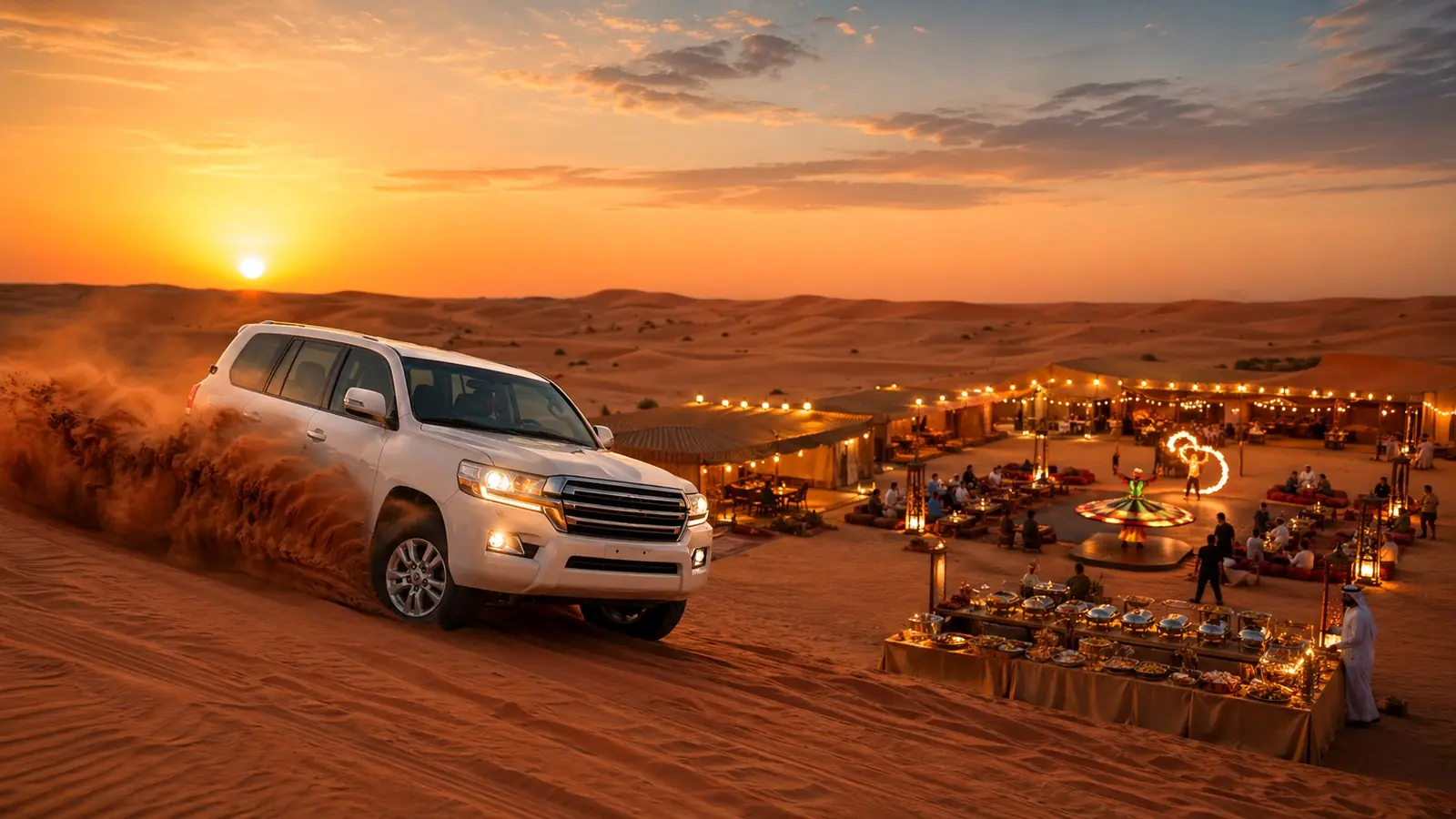
The vehicle itself matters. Most operators use modern 4x4s such as the Toyota Land Cruiser or the Nissan Patrol, but the condition and maintenance of the fleet can differ. A well-maintained vehicle with proper suspension and air conditioning makes a real difference, especially in the summer heat. Look for operators that mention the model or the age of their fleet. If the website does not specify, a quick call or message can clarify.
Step three: look at the camp facilities and dinner quality
The camp is where you will spend most of the evening, so its quality matters a lot. Basic camps offer a sandy area with a few carpets, a buffet line, and a stage. Better camps provide comfortable seating, proper tables, clean restrooms, and a covered dining area. Some even have separate sections for families and singles, which can be important for some travellers.
The dinner is typically a barbecue buffet with grilled chicken, lamb, rice, salads, and desserts. The quality varies from decent to very good. Premium operators often have live cooking stations, better cuts of meat, and a wider variety of vegetarian options. If food is a priority for you, look for reviews that specifically mention the dinner. Avoid operators where the food is described as cold or bland.
Step four: confirm what activities are included and which cost extra
Standard packages usually include camel riding, sandboarding, henna painting, shisha, and the evening show. But some operators charge extra for certain activities. For example, a longer camel ride, a private shisha corner, or professional photography might come at an additional cost. Read the fine print. If the price seems too low, there is a good chance that some of the activities you expect are not included, or that the camp is very basic.
Sandboarding is a short activity on most safaris. You get a few runs down a small dune. It is fun but not a major workout. Camel rides are usually a short loop around the camp. If you want a longer ride through the dunes, you may need a separate package. Henna painting is typically a quick design on your hand. For more intricate work, some artists charge a fee. Set your expectations accordingly.
Step five: consider the timing and sunset experience
The timing of the pickup and the route to the desert affect how much of the sunset you see. Most safaris pick you up around 3:30 to 4:00 PM, drive for about 45 minutes to an hour, and then do the dune bashing as the sun starts to lower. The timing can be tight. If the drive is long or the pickup is late, you might miss the best light. Some operators specifically time the dune bashing to end at a high dune with a clear view of the sunset. Others just drive and stop where convenient.
Ask the operator whether the sunset stop is part of the itinerary. If it is important to you, choose a safari that advertises a dedicated sunset photo stop. The difference between a rushed glance and a relaxed ten-minute break with the sun dipping over the dunes is significant.
Step six: read recent reviews for consistency
An operator that was great a year ago may have changed drivers, chefs, or camp management. Check reviews from the last three months. Look for patterns. If multiple reviews mention that the dune bashing was too short or the food was cold, take it seriously. On the other hand, a single bad review among many good ones is usually not a red flag. Pay attention to how the operator responds to criticism. A thoughtful reply shows they care about their service.
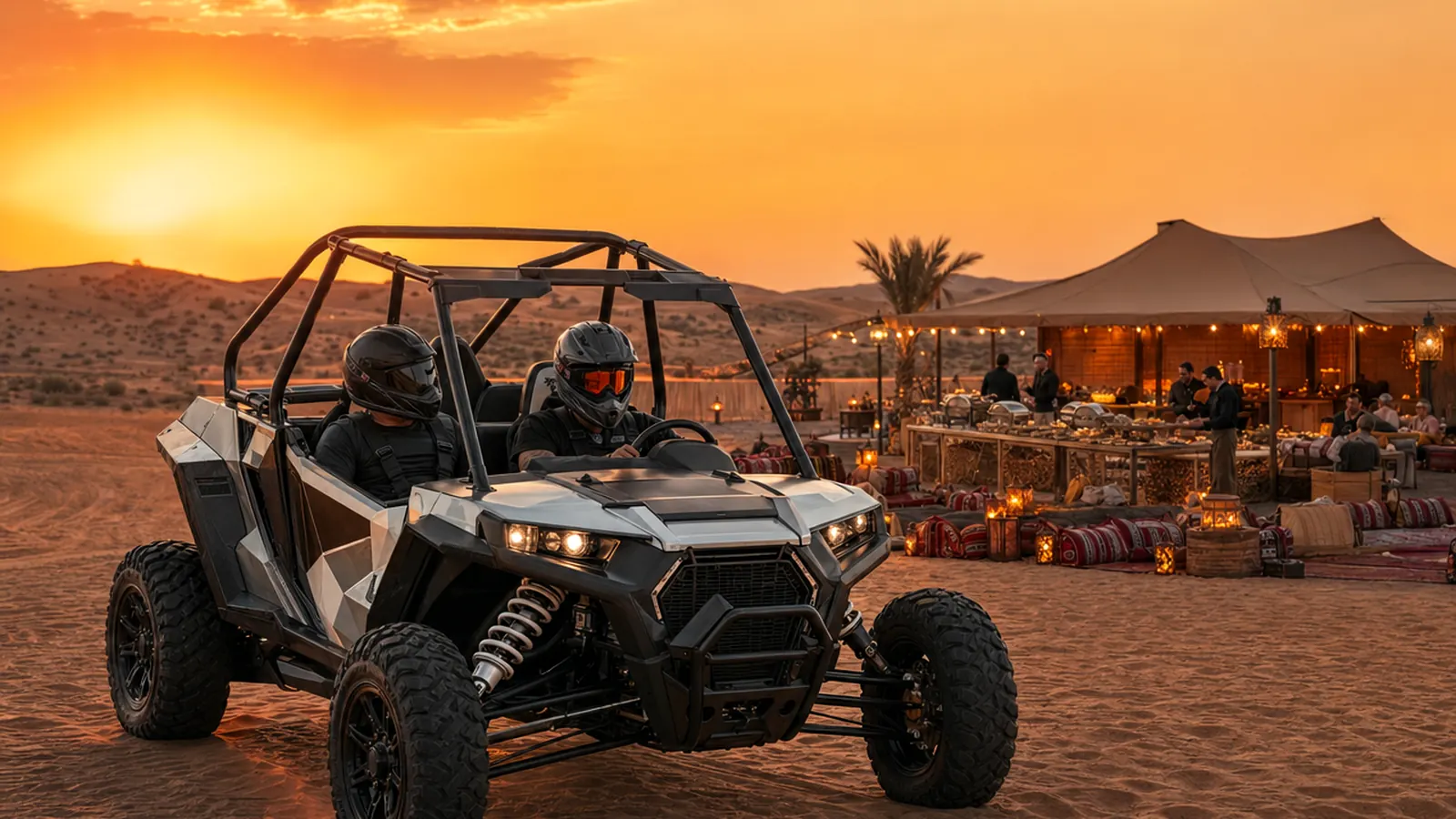
One reliable place to start your research is the Buggy Ride Dubai official site. It lists the key details of their evening safari offering, including the type of vehicles, the camp setup, and the activities included. It gives you a clear baseline to compare against other operators.
Step seven: know what to wear and bring
Dubai evenings in the desert can be surprisingly cool, especially from November to March. A light jacket or a long-sleeved shirt is a good idea after sunset. Closed-toe shoes are better for sandboarding and walking on the dunes. Sunglasses and a hat help during the late afternoon sun. Sunscreen is essential even in winter. A small bag with a scarf or a shawl can also be useful for the camel ride or the camp seating.
Most camps provide a place to leave your shoes, but the sand gets everywhere. Keep your phone and camera in a sealed pouch or a zipped pocket. Sand and electronics do not mix well.
Step eight: book in advance and confirm the details
Evening desert safaris are popular, especially during the cooler months and on weekends. Booking a day or two ahead is usually enough, but for a weekend slot, a week in advance is safer. After booking, confirm the pickup time and location. Some operators offer hotel pickup from a wide area, while others have a central meeting point. Make sure you know where to be and how long the drive to the desert will take.
If you have any special requests, such as a vegetarian meal, a front seat in the 4x4, or a private camp table, mention them at the time of booking. Operators can usually accommodate reasonable requests if they know in advance. Leaving it to the last minute often leads to disappointment.
Step nine: think about the entertainment style
The evening show is a big part of the safari. Most camps feature a Tanoura dance, a colourful spinning performance, and a belly dance show. Some also include a fire show or a traditional Arabic music performance. The quality of these shows varies. In basic camps, the performance may feel rushed or amateur. In premium camps, the dancers are skilled and the production is polished. If the entertainment matters to you, look for videos or photos of the show on the operator's site or social media.
Some camps also offer a quieter alternative, with just ambient music and a more subdued atmosphere. If you prefer a calm evening with conversation and stargazing, look for a camp that does not have a loud show. It is worth asking directly.
Putting it all together
Choosing the right evening desert safari in Dubai comes down to matching your preferences with what each operator does best. Group size, vehicle quality, camp facilities, food, activities, timing, and entertainment all play a role. The cheapest option is rarely the best, but the most expensive one is not always right for you either. Read the details, check recent reviews, and ask questions before you book. A well-chosen safari turns a standard tourist activity into a genuine highlight of your trip.
For a clear overview of one well-structured evening safari, you can visit the Buggy Ride Dubai official site. It provides the essential information you need to make an informed decision, and it serves as a useful reference point when comparing other options. Take your time, weigh what matters most to you, and you will find the safari that fits your evening perfectly.
 Facebook
 Instagram
 YouTube